


Document Actions


Helminth egg discoveries at the Letchworth archaeological site, Florida, USA, show evidence for animal resource use during c. 400 BC-AD 800
Horrocks M, Menz M, Presswell B. 2026. Journal of Helminthology 100, e53, 1–7.
Abstract
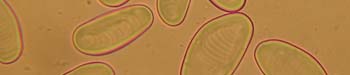
Here we report microfossil helminth analysis of 18 soil/sediment samples from the Letchworth site, Florida, dating c. 400 BC-AD 800 in the Woodland Period. The discovery of helminth eggs of Toxocara canis, Dipylidium caninum, a species of taeniid cestode, and Hymenolepis sp. provides probable evidence of domesticated dogs, and possibly also commensal rodents that could have been hunted or attracted to settlement. The parasites could have affected the health of people and their dogs.Helminths provide crucial faunal evidence at the site, as there is a lack of macro-remains due to poor preservation. The relatively high frequency of T. canis eggs at Letchworth (11 samples) is consistent with that at the Cloudman site in Michigan (another North American site where T. canis helminths have been identified), where all samples analysed (12) contained these eggs, while the other helminth types were recorded in fewer samples. This consistency could reflect extensive, intensive human-dog associations for long periods in North America, in conjunction with direct faunal evidence for dogs and other parasitological evidence indicating T. canis. The Letchworth results offer a new line of probable evidence of domesticated dogs in the American Southeast, particularly along the Gulf Coast where bone material is often poorly preserved.


